 Tile & Marble Cutting
 Concrete Blade
 Cutting&Grinding Blade
 Carving&Cutting Blade
 Oscillating Blade
 Diamond Drill Bit Kit
 5/8-11" Thread
 M14 Thread
 Hex Shank
 Turbo Row Wheel
 Vacuum Brazed Grinding Wheel
 Profile wheel
 PCD Grinding Wheel
 Diamond Polishing Pads for Stone
 Diamond Polishing Pads for Concrete
 Diamond Hand Polishing Pads
  Other Tools & Accessories
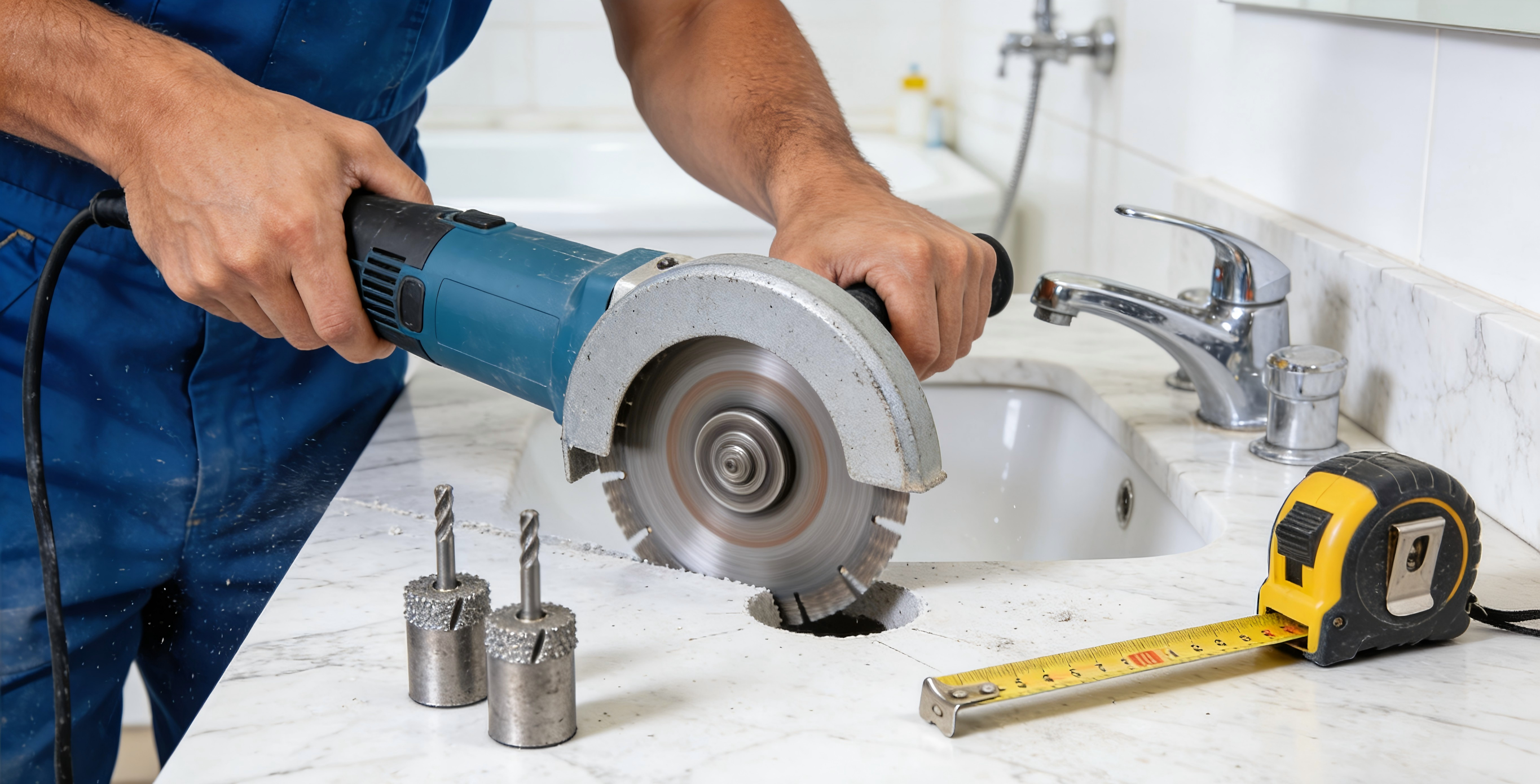
Angle grinders are versatile power tools, essential for DIY enthusiasts and professionals alike—from cutting metal and masonry to grinding welds and polishing surfaces. But to use them safely and effectively, understanding three key factors is non-negotiable: angle grinder size, compatible blade sizes, and speed limits. This guide dives deep into these details, referencing official product manuals from top brands like Dewalt and Makita, to ensure you match your tool and blade correctly every time.
Angle Grinder Size and Compatible Blade Sizes: A Manual-Referenced Guide
An angle grinder’s size is defined by the maximum diameter of the blade it can safely accommodate, and this pairing is strictly outlined in every manufacturer’sinstruction manual. Using a blade larger than the tool’s rated size is a critical safety hazard—blades can shatter under stress, causing serious injury. Below are the most common grinder sizes, their compatible blade sizes, and insights from brand manuals.
1. 4.5-Inch (115mm) Grinders
The 4.5-inch (115mm) grinder is the most popular choice for DIYers and light professional use, as noted in both Dewalt and Makita manuals. According to Dewalt’s product specifications for models like the DWE4020, this size is designed exclusively for 4.5-inch (115mm) blades with a 5/8”-11 arbor (North America) or M14 arbor (international). Makita’s GA4530 manual reinforces this, stating that 115mm grinders cannot use blades larger than 4.5 inches, as the tool’s motor and guard are not engineered to handle the increased diameter and centrifugal force.
2. 5-Inch (125mm) Grinders
Slightly larger than the 4.5-inch model, 5-inch (125mm) grinders balance maneuverability and cutting capacity. Dewalt’s DWE4357-QS manual specifies that this 125mm grinder is compatible only with 5-inch blades, with a recommended arbor size of M14. Makita’s 125mm grinders, such as the GA5040, echo this, adding that using 4.5-inch blades is allowed (with proper adapter rings, if included) but not ideal—smaller blades may reduce cutting depth and efficiency without improving safety.
3. 7-Inch (180mm) and 9-Inch (230mm) Grinders
These larger grinders are built for heavy-duty tasks like industrial metal cutting and concrete grinding. Dewalt’s DWE4557 7-inch grinder manual states it requires 7-inch (180mm) blades, with a maximum speed tailored to this size. For 9-inch (230mm) models, such as Makita’s GA9020, the manual explicitly prohibits blades smaller than 9 inches, as the tool’s spindle and guard are sized for larger blades—using smaller ones can cause instability and blade slippage.
Maximum No-Load Speeds of Top Angle Grinder Brands (Dewalt, Makita)
A grinder’s maximum no-load speed (measured in RPM, revolutions per minute) is a key specification in every product manual, as it determines which blades are safe to use. Blades have a maximum safe RPM rating, and the grinder’s speed must never exceed this—per Dewalt and Makita safety guidelines. Below are the maximum no-load speeds for popular models, directly from official manuals.
Dewalt Angle Grinders
- Dewalt DWE4020 (4.5-inch corded): 11,000 RPM (manual specification). This entry-level model is designed for light grinding and cutting, with a speed optimized for 4.5-inch metal-cutting and grinding blades.
- Dewalt DWE4357-QS (5-inch corded, brushless): 2,200–10,500 RPM (variable speed). The manual notes that the variable speed feature allows users to adjust RPM for different materials, but the maximum no-load speed is 10,500 RPM.
- Dewalt DWE4557 (7-inch corded): 8,500 RPM. This heavy-duty model’s manual emphasizes that its 8,500 RPM maximum speed is engineered for 7-inch blades, ensuring optimal material removal without overloading the motor.
Makita Angle Grinders
- Makita GA4530 (4.5-inch corded): 11,000 RPM. The manual states this speed is ideal for 4.5-inch grinding and cutting blades, with a focus on precision for DIY and light professional tasks.
- Makita GA5040 (5-inch corded): 10,000 RPM. Designed for general-purpose use, the manual recommends this speed for most 5-inch blades, including metal-cutting, grinding, and sanding discs.
- Makita GA9020 (9-inch corded): 6,600 RPM. As a heavy-duty industrial model, its manual specifies a lower maximum speed (compared to smaller grinders) to handle the larger 9-inch blades safely—higher speeds would risk blade failure.
Different Blade Types and Their Maximum Safe Speeds
Every angle grinder blade has a maximum safe RPM rating, printed on the blade itself and detailed in the manufacturer’s manual. This rating must be equal to or higher than the grinder’s maximum no-load speed—failure to comply can result in blade shattering. Below are common blade types and their typical RPM limits, aligned with Dewalt and Makita’s safety recommendations.
1. Metal-Cutting Blades
Thin metal-cutting blades (1.0–1.2mm thick) are the most common type. According to Dewalt’s blade manual, 4.5-inch and 5-inch metal-cutting blades have a maximum safe RPM of 13,300–15,000 RPM—well above the maximum speed of most 4.5/5-inch grinders (10,000–11,000 RPM). For 7-inch metal-cutting blades, the maximum safe RPM drops to 8,725 RPM, matching Dewalt’s 7-inch grinder speed of 8,500 RPM. Makita’s metal-cutting blade manual echoes this, noting that larger blades have lower maximum RPM due to increased centrifugal force.
2. Grinding Discs
Grinding discs (5–8mm thick) are used for smoothing welds, removing rust, and shaping metal. Their maximum safe RPM is slightly lower than cutting blades: 4.5/5-inch grinding discs typically rate at 12,000–13,300 RPM, while 7/9-inch discs rate at 6,000–8,725 RPM. Dewalt’s manual advises that grinding discs should never be used above their rated RPM, as their thicker design is prone to cracking under excess speed.
3. Diamond Blades (for Masonry/Concrete)
Diamond blades are designed for cutting concrete, tile, and stone. According to both Dewalt and Makita’s blade manuals, 4.5/5-inch diamond blades have a maximum safe RPM of 12,000–13,300 RPM, while 7/9-inch diamond blades rate at 6,500–8,725 RPM. These blades are more durable but still require strict RPM adherence—over-speeding can cause diamond segments to detach.
Key Safety Takeaways from Product Manuals
Both Dewalt and Makita emphasize three critical rules in their manuals: (1) Never use a blade larger than the grinder’s rated size; (2) Always check that the blade’s maximum safe RPM is at least equal to the grinder’s maximum no-load speed; (3) Inspect blades for cracks or damage before use, as even a small defect can lead to failure at high speeds. Following these guidelines ensures not only your safety but also longer tool and blade life.
Whether you’re a DIYer using a 4.5-inch Dewalt or a professional with a 9-inch Makita, matching your grinder size, blade size, and speed is the foundation of safe, effective use. Always refer to your tool and blade manuals for specific specifications—they’re your best resource for avoiding hazards and getting the most out of your angle grinder.
|(注:文档部分内容可能由 AI 生成)