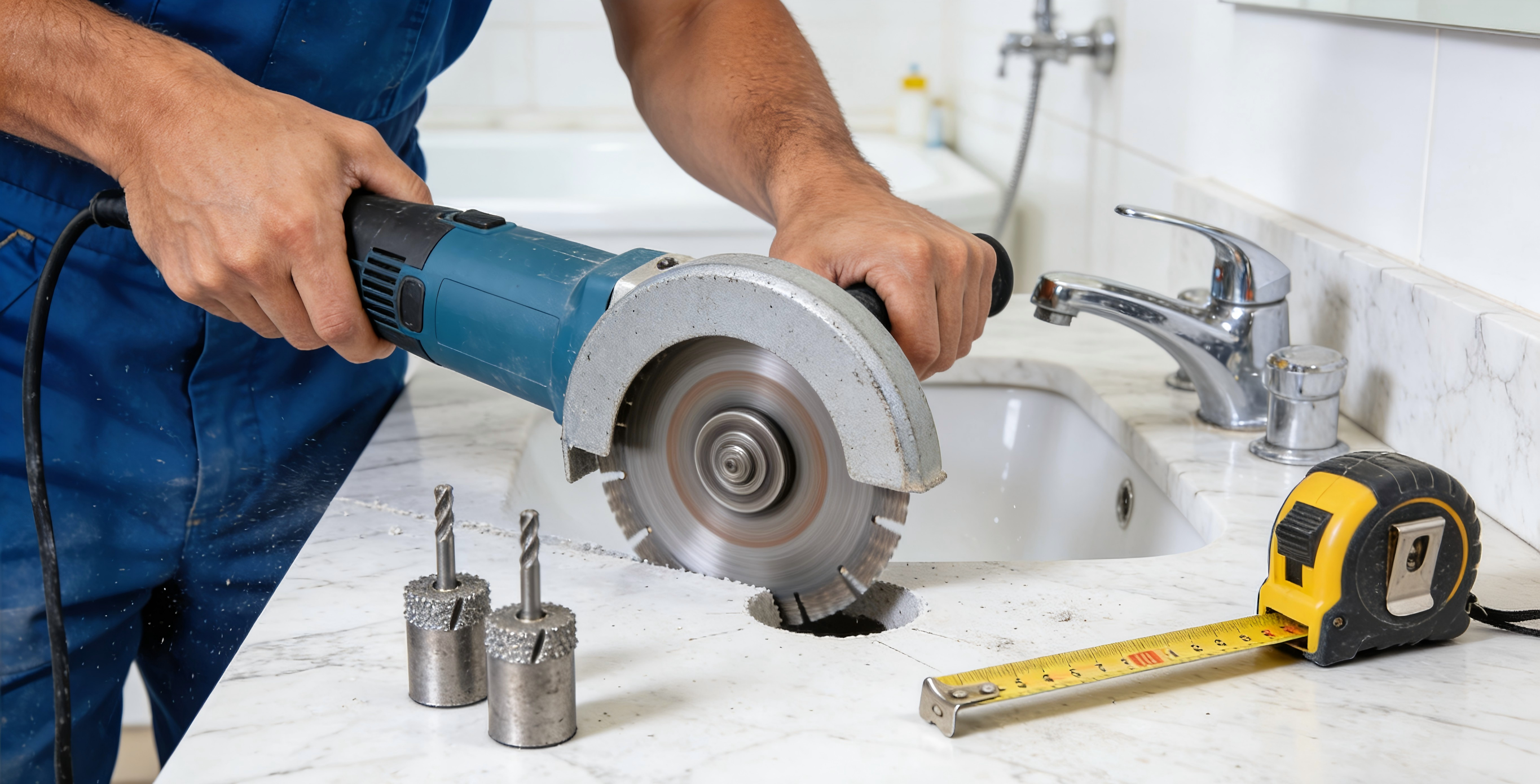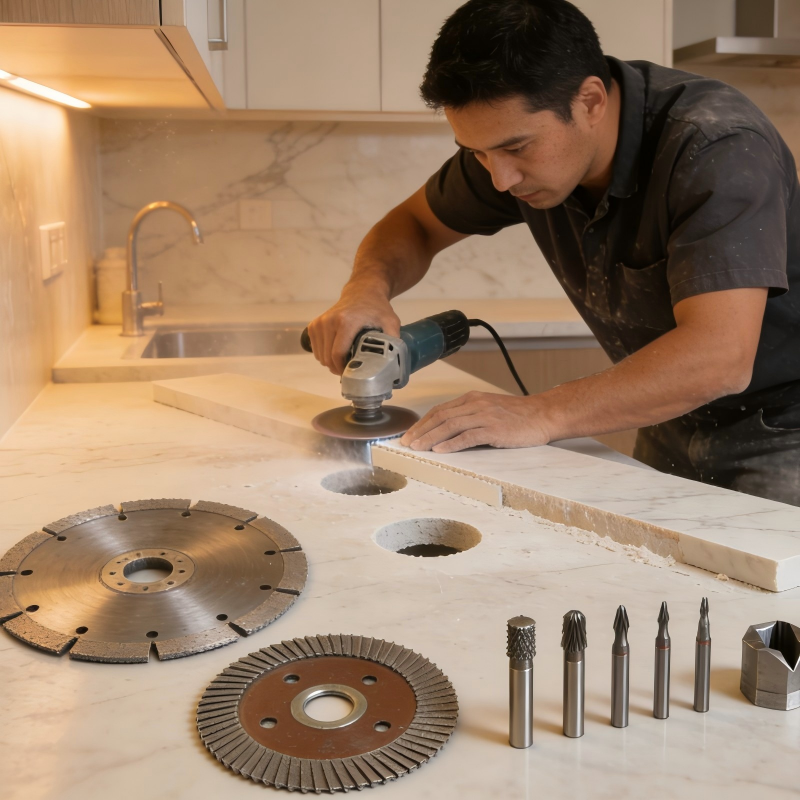
 Tile & Marble Cutting
 Concrete Blade
 Cutting&Grinding Blade
 Carving&Cutting Blade
 Oscillating Blade
 Diamond Drill Bit Kit
 5/8-11" Thread
 M14 Thread
 Hex Shank
 Turbo Row Wheel
 Vacuum Brazed Grinding Wheel
 Profile wheel
 PCD Grinding Wheel
 Diamond Polishing Pads for Stone
 Diamond Polishing Pads for Concrete
 Diamond Hand Polishing Pads
  Other Tools & Accessories
In modern masonry and stone work, diamond tooling is no longer a niche upgrade—it is the industry standard. According to fabrication and construction benchmarks, diamond tools outperform traditional abrasives in cutting speed, lifespan, and precision, particularly when working with dense materials like porcelain, granite, and reinforced concrete. Yet despite their widespread use, improper selection of diamond drill bits, saw blades, and hole saw tools remains one of the leading causes of chipping, premature wear, and inefficient stone cutting on job sites.
Common Mistakes in Masonry Tool Selection
A recurring issue in tool procurement is the mismatch between tool specifications and material properties. Key problems include:
-
Material-tool incompatibility: Using general-purpose saw blades on high-density stone like granite reduces cutting efficiency and increases edge damage
-
Improper grit specification: Coarse diamonds improve stock removal but compromise finish quality; fine grit improves finish but slows productivity
-
Insufficient segment height: Lower diamond segments (<8mm) significantly reduce tool lifespan under continuous use
-
Improper diameter selection: Mismatch between blade size and machine RPM leads to instability and potential safety hazards
These factors directly impact both productivity and total project cost in masonry applications.
Application-Based Tool Selection
1. Bathroom Renovation (Tile, Porcelain, Marble)
Precision dominates this category, particularly for visible surfaces and fixture integration.
Recommended tools:
-
Thin rim diamond saw blades
Diameter: 4"–5"
Designed for chip-free cutting on brittle materials -
Diamond drill bits / hole saw
Essential for plumbing penetrations
Typical range: 6mm–68mm
Technical considerations:
-
Grit: medium-fine (optimized for edge quality)
-
Segment height: ≥8mm for extended service life
2. Floor Tiling and Large Surface Installation
Efficiency and consistency are the primary requirements in large-scale tile installation.
Recommended tools:
-
Continuous rim or segmented saw blades
Diameter: 7"–10"
Suitable for tile saw systems -
Diamond grinding tools
Used for edge refinement and leveling
Technical considerations:
-
Grit: medium-coarse (balanced speed and finish)
-
Segment height: ≥10mm for prolonged cutting cycles
3. Concrete, Brick, and Structural Masonry
High-load applications require aggressive cutting performance and thermal resistance.
Recommended tools:
-
Segmented diamond saw blades
Enhanced cooling for dry cutting conditions -
Heavy-duty diamond drill bits
Used for structural drilling and pipe installations
Typical sizes:
-
Saw blades: 9"–14"
-
Drill bits: 10mm–150mm+
Technical considerations:
-
Grit: coarse (maximizes cutting rate)
-
Segment design: wider gullets for debris removal and heat dissipation
Core Technical Parameters
A systematic approach to tool selection in masonry should prioritize:
-
Diamond grit size
Coarse: rapid material removal
Fine: improved surface finish -
Segment height
8–10mm: standard applications
10mm+: heavy-duty, extended use -
Tool diameter
4"–5": precision cutting
7"–10": general-purpose work
12"+: industrial-scale cutting -
Cutting method
Wet cutting: reduces thermal stress and extends tool life
Dry cutting: increases flexibility but requires intermittent cooling
Operational Best Practices
Even the highest-grade diamond drill bits and saw blades will underperform without proper handling:
-
Maintain consistent feed pressure—excess force accelerates segment wear
-
Operate within manufacturer-recommended RPM ranges
-
Use water cooling whenever feasible to control heat buildup
-
Always wear PPE, including eye protection and dust control equipment