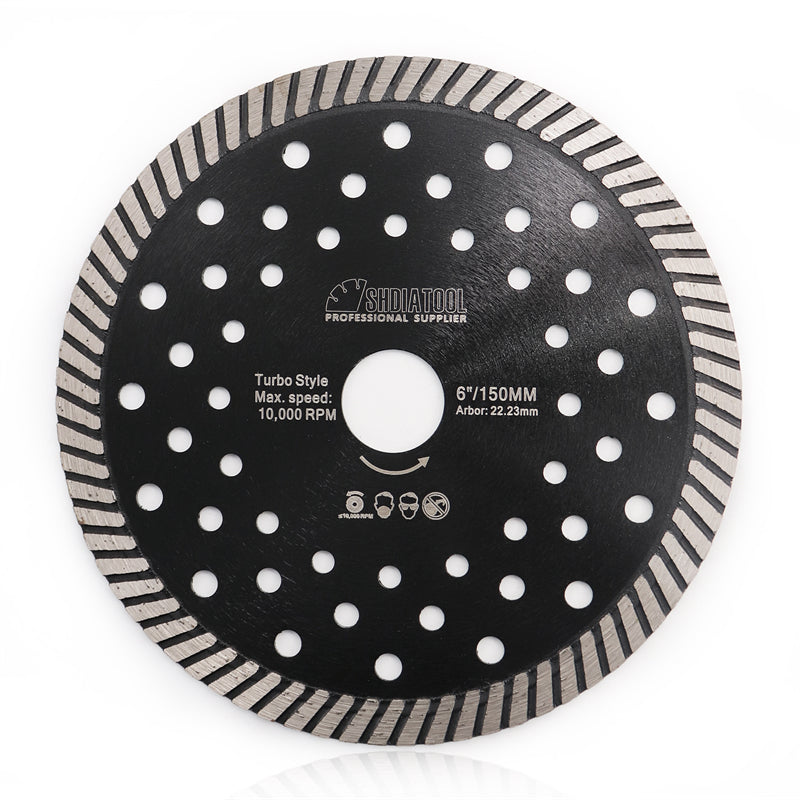
 Tile & Marble Cutting
 Concrete Blade
 Cutting&Grinding Blade
 Carving&Cutting Blade
 Oscillating Blade
 Diamond Drill Bit Kit
 5/8-11" Thread
 M14 Thread
 Hex Shank
 Turbo Row Wheel
 Vacuum Brazed Grinding Wheel
 Profile wheel
 PCD Grinding Wheel
 Diamond Polishing Pads for Stone
 Diamond Polishing Pads for Concrete
 Diamond Hand Polishing Pads
  Other Tools & Accessories
Replacing a diamond grinding pad before understanding the problem can increase tooling costs and slow down the entire job. If a grinding pad stops cutting effectively, leaves stubborn scratches, or wears out too quickly, the cause may not be the quality of the diamonds. The bond, grit size, material being ground, and machine settings all affect how the tool performs.
Concrete, granite, marble, and terrazzo require different approaches. A pad that works well on one material may glaze over on another or wear out before completing the job.
Before changing tools, check what is happening at the working surface. The following six causes explain why diamond grinding pads lose cutting efficiency, how to identify the problem, and what to consider when choosing a replacement.
1. The Bond Is Too Hard or Too Soft for the Material
The bond holds the diamond particles in place and gradually wears away to expose fresh cutting edges. Its wear rate must match the material being ground. If the bond wears too slowly, the diamonds can become dull without being adequately exposed. If it wears too quickly, usable diamonds may be released before their cutting life is fully utilized.
For concrete floor grinding, a useful starting point is to use a softer bond on hard concrete and a harder bond on soft, highly abrasive concrete. This is a general selection principle, not a universal rule for every grinding tool or surface.
Hard concrete: Consider a softer bond
Dense concrete can be difficult to grind because the exposed diamonds may wear slowly. If the bond is too hard for the application, worn diamonds remain trapped in the working surface. The pad may become smooth and shiny, a condition known as glazing, while grinding progress slows considerably.
A softer bond is generally more suitable because it wears away more readily and exposes fresh diamond particles.
Check the working face for glazing before increasing machine pressure. If the diamonds are no longer cutting effectively, applying more pressure may generate additional heat and accelerate wear without correcting the underlying problem.
Soft or highly abrasive concrete: Consider a harder bond
Soft concrete and concrete with highly abrasive aggregates can wear away the bond quickly. If the bond is too soft, the diamond segments may lose material excessively, shortening the service life of the tool.
A harder bond generally retains the diamonds for longer under these conditions.
However, concrete strength alone does not tell the whole story. Aggregate composition, cement paste, surface condition, and the presence of coatings can all affect grinding performance. The appropriate bond should be selected for the actual floor and machine rather than from a simple hard-versus-soft classification.
Granite and marble: Choose a compatible stone-grinding system
Granite, marble, and concrete should not automatically be treated as interchangeable applications. Granite varies in mineral composition and abrasiveness, while marble is more susceptible to scratching and surface damage.
For granite, select tooling designed for the material and the required grinding or polishing stage. For marble, use a compatible stone-processing system that can remove scratches without unnecessary surface damage.
Concrete grinding segments, stone-grinding tools, and resin-bond polishing pads have different designs and purposes. The bond-selection rule used for concrete floor grinding should not be applied indiscriminately to all stone-polishing products.
2. The Grit Is Too Fine for the Work Required
A diamond grinding pad may appear ineffective simply because the grit is not aggressive enough for the amount of material that needs to be removed.
Coarser grits are generally used for initial grinding, leveling, and removing surface defects. Finer grits are used to reduce scratches and prepare the surface for subsequent grinding or polishing.
If a concrete floor has uneven areas or a stone edge requires substantial shaping, starting with a very fine pad can make the work unnecessarily slow. Choose a suitable coarse grit for the initial stage, then progress through the recommended grit sequence.
The opposite mistake is using a grit that is too coarse for a surface that is already relatively flat. Although material removal may be faster initially, the deeper scratches can require additional grinding stages to remove.
For granite and marble, follow a compatible progression from coarse grinding to finer finishing. Do not assume that every pad system uses the same grit numbering or that a particular sequence works equally well across all materials.
Practical check: If the pad cuts slowly but the working face is clean and the bond is exposing diamonds correctly, check whether the grit is appropriate. If the surface has become shiny and glazed, changing to a coarser grit alone may not solve the problem.
3. The Grinding Method Does Not Match the Material
Even a correctly selected pad can perform poorly if the operating method does not suit the material or the tool.
Concrete
Keep the grinder moving at a consistent pace and avoid holding the tool in one place for too long. Excessive pressure can overload the machine, increase heat, and cause uneven wear. It does not necessarily produce faster material removal.
If the pad stops cutting, inspect the segments and check the bond selection before attempting to compensate with additional pressure.
Granite
Granite grinding and polishing usually involve several stages. Initial grinding removes material and corrects the surface, while subsequent stages reduce scratches and prepare the stone for finishing.
Use pads intended for granite and the machine being operated. For wet grinding, maintain adequate water supply to cool the working area and carry away residue. Insufficient cooling can interfere with the process and affect the final finish.
Marble
Marble requires particular attention to surface quality because aggressive grinding can leave scratches that are difficult to remove. Use controlled pressure, keep the tool moving evenly, and avoid using a coarser grit than the job requires.
Wet grinding is common in marble processing, but the pad and equipment must be suitable for wet use. For dry processing, use a compatible system with effective dust extraction.
Terrazzo
Terrazzo combines a matrix with exposed aggregates, which may include marble, granite, glass, or other materials. Cementitious terrazzo and epoxy terrazzo can behave differently during grinding.
Choose tooling that suits the matrix and aggregate combination. Test a small area first, especially if the aggregate composition is unknown or the floor has been repaired.
For every material, follow the manufacturer's specified RPM range and operating instructions. A higher speed does not automatically improve cutting efficiency, and exceeding the tool's rated speed can create a serious safety risk.
4. The Working Surface Is Glazed, Loaded, or Worn Out
A diamond grinding pad needs exposed cutting edges to remove material effectively. When the working surface becomes glazed, the bond may retain worn diamonds or cover enough of the cutting structure to reduce performance. Loading occurs when grinding residue or removed material accumulates on the working surface and interferes with cutting.
Both conditions can cause slow grinding, but they are not identical.
Glazing: The working face appears unusually smooth or shiny, and the tool produces little material removal despite operating under otherwise suitable conditions.
Loading: Residue or deposits build up on the working face, potentially interfering with contact between the diamonds and the material.
Normal wear: The diamond layer or segments have gradually worn down through use. If the tool has reached its wear limit, cleaning or dressing will not restore the missing material.
What should you do when a pad stops cutting?
First, stop the machine and disconnect the power where applicable. Allow the tool to cool, then inspect the working face for glazing, accumulated residue, uneven wear, missing segments, cracks, and attachment damage.
If the pad is loaded, clean it only using a method approved by the manufacturer. If the pad is glazed, check whether its bond is suitable for the material and whether an approved dressing procedure is available.
Some metal-bond diamond grinding tools can be dressed on a suitable abrasive dressing block or another manufacturer-approved dressing material. The correct method depends on the tool design and application. Do not assume that every grinding pad can be restored in the same way.
Avoid casually dressing a pad on sandstone, asphalt, or an unidentified concrete surface. An unsuitable dressing material or operating method can damage the tool, cause uneven wear, or create excessive dust. Never attempt dressing if the manufacturer prohibits it.
If the diamonds or segments are worn beyond their service limit, or if the tool is cracked or structurally damaged, replace it.
5. The Machine Speed, Pressure, or Cooling Is Incorrect
Machine settings influence how effectively a diamond pad engages with the material. A pad operating outside its intended speed range may cut inefficiently, overheat, or wear abnormally.
There is no single RPM suitable for every diamond grinding pad. The correct speed depends on the tool diameter, machine type, pad design, and application. Always follow the manufacturer's rating rather than selecting a speed based on appearance or guesswork.
Pressure must also be appropriate. Too little pressure may prevent effective contact in some applications, while excessive pressure can overload the machine, damage the surface, and accelerate wear.
Cooling is especially important when processing stone. For wet grinding, check that water reaches the working area and removes residue effectively. For dry grinding, confirm that the pad is designed for dry use and that suitable dust extraction is in place.
If the tool vibrates, overheats, or produces inconsistent results, stop the machine and inspect the pad, attachment, backing plate, and machine condition. Do not continue operating a damaged or improperly mounted tool.
6. The Pad Is Not Designed for the Job
A diamond grinding pad intended for polishing may not be suitable for heavy material removal. Likewise, an aggressive metal-bond floor-grinding segment may leave scratches that are unacceptable during the final stages of stone polishing.
Different tooling systems are designed for different tasks. Metal-bond diamond segments are widely used for concrete floor grinding and surface preparation, while resin-bond diamond pads are commonly used for stone polishing and scratch refinement. Other tools are designed for particular machines, materials, or finishing processes.
Before choosing a replacement, confirm the material, the amount of material to remove, the required surface finish, the pad's attachment, the operating speed, and whether the application requires wet or dry processing.
Do not select a pad solely because it has a higher advertised diamond concentration or a lower price. The more important question is whether the tool's design matches the material and the work being performed.
Which Diamond Grinding Pad Should You Choose?
| Material | Selection considerations | Operating approach | Common problem to watch for |
|---|---|---|---|
| Hard concrete | Consider a softer bond for concrete grinding; choose a grit suitable for surface preparation | Maintain consistent movement and inspect for glazing | Slow cutting or a shiny working face |
| Soft, abrasive concrete | Consider a harder, more wear-resistant bond | Avoid excessive pressure and monitor segment wear | Rapid segment consumption |
| Granite | Use tooling designed for granite and the required grinding stage | Follow the compatible grit sequence and cooling requirements | Persistent scratches or inconsistent finish |
| Marble | Use a compatible stone-grinding or polishing system | Apply controlled pressure and avoid unnecessary aggressive grinding | Deep scratches, heat damage, or uneven finish |
| Cementitious terrazzo | Consider both the cement matrix and the exposed aggregate | Test a small area and monitor wear across different components | Uneven grinding between matrix and aggregate |
| Epoxy terrazzo | Confirm compatibility with the resin matrix and aggregate | Follow the tooling manufacturer's recommendations | Smearing, uneven removal, or surface damage |
These recommendations are starting points rather than fixed specifications. The actual choice should account for the tool design, aggregate composition, machine, and required finish.
A Quick Checklist Before Replacing Your Diamond Grinding Pad
When a diamond grinding pad stops removing material effectively, work through these checks before buying a replacement.
-
Identify the material. Determine whether you are grinding hard concrete, abrasive concrete, granite, marble, or terrazzo.
-
Inspect the working face. Look for glazing, accumulated residue, uneven wear, missing segments, or structural damage.
-
Check the bond and grit. Confirm that the bond suits the grinding conditions and that the grit matches the amount of material to remove.
-
Review the operating conditions. Verify the machine speed, pressure, cooling method, attachment, and wet or dry compatibility.
-
Test one change at a time. If the tool is safe to use, test a suitable adjustment on a small area and compare the results before continuing with the full job.
-
Replace damaged or exhausted tooling. Do not try to restore a tool that has reached its wear limit or has structural damage.
Need Help Choosing the Right Diamond Grinding Pad?
If your diamond grinding pad is cutting slowly, wearing out too quickly, or leaving scratches, identifying the material and the operating conditions is the first step toward solving the problem.
SHDIATOOL offers diamond tooling for different grinding and polishing applications. Before choosing a product, confirm the material, machine type, required finish, and whether you need aggressive grinding or finer surface refinement.
Not sure which pad suits your project? Contact SHDIATOOL with your material, machine model, pad specifications, and a photo of the working surface. This information can help narrow down the appropriate tooling options and identify the likely cause of poor grinding performance.